Cider Apples, Terroir, and the Choices That Shape the Glass
Great cider doesn’t start in the fermenter, it starts with apples—and which apples you choose says everything about the cider you’re trying to make. At Tumbling Creek, we don’t believe there’s only one “right” way to make cider. Modern American hard cider and heritage hard cider both have a place here. We like them both. What matters is intention, experience, and knowing how to work with the fruit in front of you.

At Tumbling Creek, our experience
shows up in every decision
—from apple to bottle.
Modern American hard cider typically relies on cultivated apple varieties selected for consistency. These apples deliver clean, recognizable apple flavor and predictable sugar levels. When paired with modern fermentation techniques, the result is a cider that’s approachable, expressive, and reliably delicious from batch to batch.
That approach works beautifully for ciders like Peach, High Trestle, Smoked Jalapeño, and Hellbender Hopped. These ciders still begin in the orchard, but they’re designed to showcase clarity, balance, and the way apples interact with local ingredients like peaches, hops, ginger, and peppers.
Heritage hard cider asks something different of the orchard.
For those ciders, we grow and work with heirloom apple varieties—Kingston Black, Harrison, and others that were historically planted not for fresh eating, but for fermentation. These apples are more complex. More tannic. Sometimes more stubborn. They bring bitterness, acidity, and texture that don’t show up right away, but deepen over time.
They’re also inseparable from where they’re grown.
Virginia’s terroir plays a defining role here. Warm summers build sugar. Cooler nights preserve acidity. Our soils contribute mineral structure and subtle texture. The result is apples that carry a sense of place—something you can taste once fermentation strips away sweetness and leaves only what the fruit truly has to say.
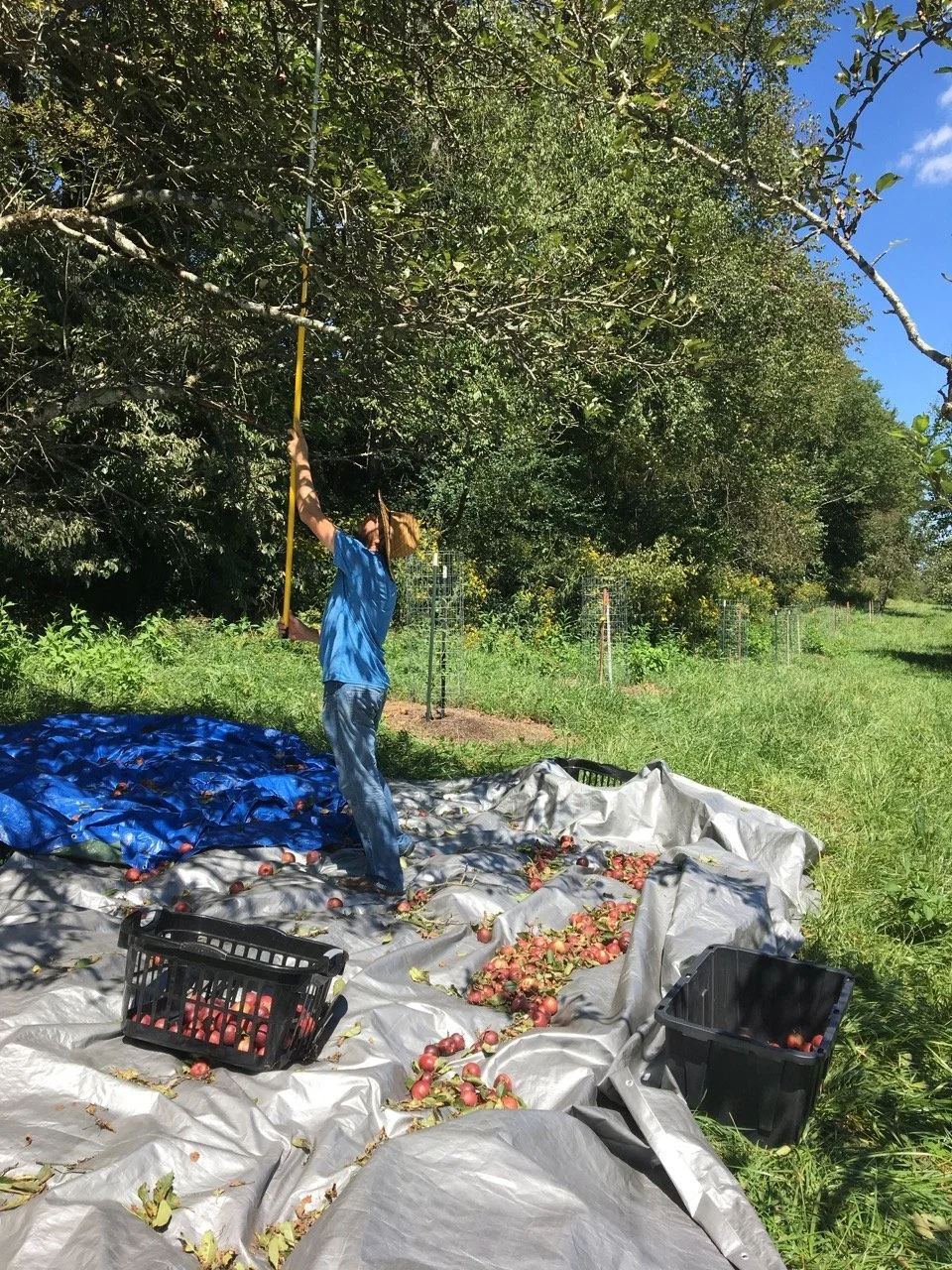
These apples aren’t chosen casually. They’re planted for the long haul.
They take years to mature.
And they require experience to harvest
at exactly the right moment.
Heritage ciders like Moonshot and Ridgerunner lean into this complexity. They aren’t meant to taste the same every year. They’re meant to taste honest. Dry to semi-sweet. Earthy. Structured. Reflective of the orchard and the season that produced them.
At Tumbling Creek, our experience shows up in every decision—from apple to bottle. From choosing varieties that belong here, to knowing which apples serve which style of cider best.
All of it starts in the orchard.
And every bloom is a reminder that patience always pays off. Our experience is what keeps our cider…
